

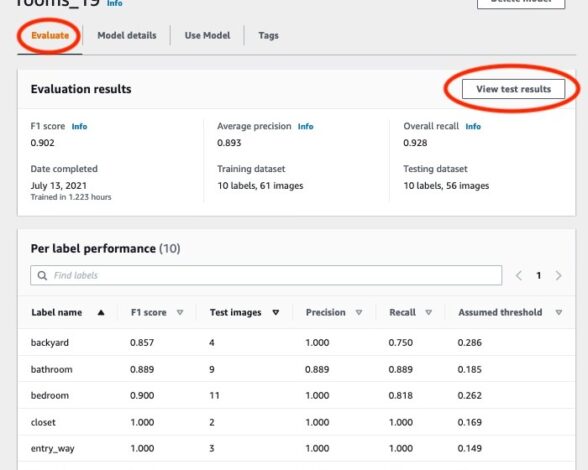
Imagine a support assistant whose average answer-quality score improves after a model update, but which still produces one unsafe, unsupported answer for a high-risk customer request. That single failure can outweigh a general improvement. A production decision therefore needs evidence about quality, safety, reliability, and operational behavior—not one headline score. This article presents a practical, evidence-based AI feature evaluation approach.
An AI feature can look successful in a product demo and still fail on ambiguous inputs, edge cases, unsafe requests, changing data, or operational constraints. That is why pre-production AI testing should examine variable outputs against task-specific quality and safety expectations, rather than relying only on deterministic pass-or-fail checks.
Evaluation is a lifecycle activity. NIST describes Govern, Map, Measure, and Manage as connected functions, while its measurement guidance emphasizes comparing performance before and after deployment and reviewing metrics as contexts change.[1][2]
Define scope and prepare the evaluation
For this plan, the scope is the AI feature and the evidence needed for its production release—not a full assessment of every surrounding product process. Include the feature’s intended users, supported use cases, connected retrieval or tool components, evaluation environment, and release behaviors. Explicitly exclude unrelated product behavior so the evaluation remains aligned with the decision being made.
Setup and prerequisites
Prepare the environment before testing. Confirm that baseline and candidate use the same versioned cases and that outputs, model and workflow versions, judgments, failure notes, and release decisions are recorded.
Before running tests, confirm these prerequisites:
- A defined baseline and candidate version
- A versioned evaluation dataset with expected behavior and risk tags
- An evaluation environment that records relevant model, prompt, retrieval, tool, and workflow versions
- Automated checks and human reviewers for cases that require contextual or risk judgment
- A results record for outputs, scores, failure reasons, remediation status, and approval
- A named owner for the release decision and escalation path for unresolved failures
Start with the release decision
Tie the evaluation plan to the release decision the team must eventually make, then choose only the evidence needed to support it. Ask:
What must be true for this feature to move from controlled testing to production?
Write the decision around a concrete use case: an internal support assistant should answer from approved documentation, abstain when retrieval confidence is insufficient, and escalate sensitive requests to a human reviewer.
Define the conditions that would block release. Possible decisions include:
- Ready for production
- Ready for a limited or monitored rollout
- Requires further testing or remediation
- Not suitable for the intended use
Record the decision, the evidence behind it, and the person who accepts any remaining risk.
For the support assistant, write one testable behavior for each request type—for example, answer with a cited passage, abstain when evidence is missing, or escalate when the request is sensitive.
Build a lightweight ownership model
Assign each evidence item to the person who can judge it: product owns the intended outcome, engineering owns versions and traces, domain reviewers judge answer correctness, security reviews unsafe actions, and operations owns alerts and escalation.
NIST guidance emphasizes multidisciplinary perspectives and regular assessment, supporting involvement beyond the model or software team.[1][2] The roles below assign practical ownership for a planning exercise:
| Role | Primary responsibility |
|---|---|
| Product owner | Defines the intended task, users, and business impact |
| Engineering lead | Provides the evaluation environment, versions, traces, and release controls |
| QA or evaluation lead | Maintains test cases, runs assessments, and analyzes failures |
| Domain reviewer | Judges correctness, relevance, and contextual suitability |
| Security or risk representative | Reviews misuse, privacy, safety, and high-impact failure modes |
| Operations or support owner | Defines monitoring, escalation, and incident response |
| Approver | Decides whether residual risk is acceptable |
Create a representative evaluation dataset
Build the dataset around production inputs and the failures the team most needs to prevent.
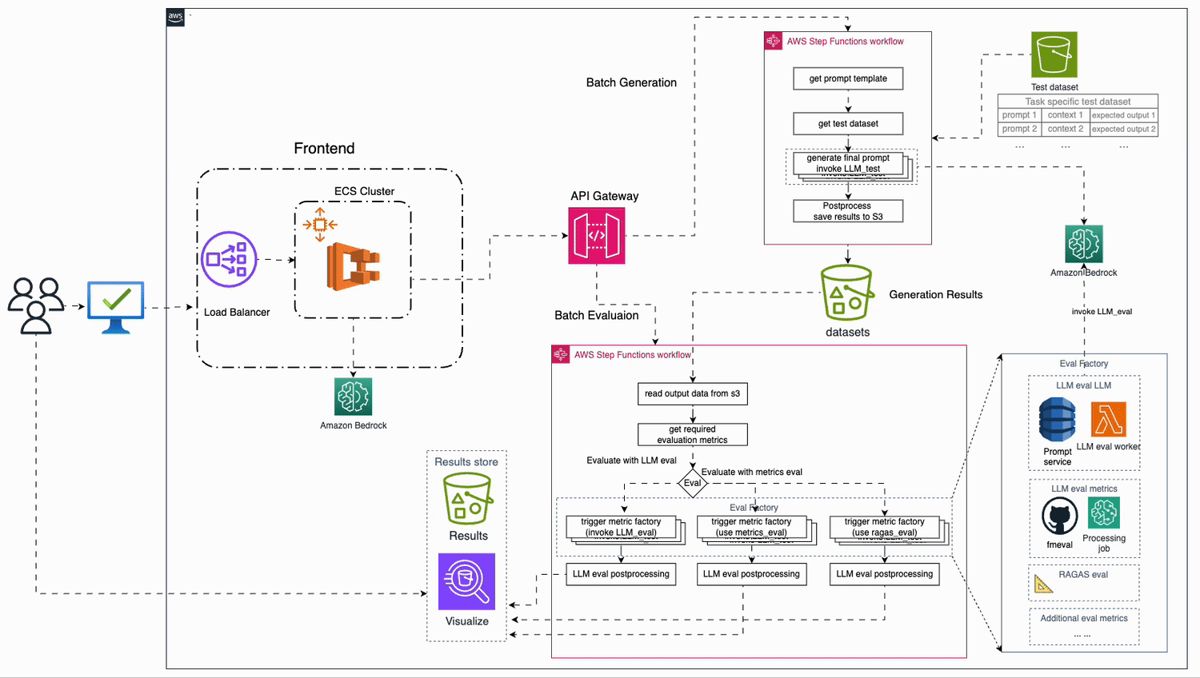
Build the dataset from normal requests alongside boundary, ambiguous, previously failed, adversarial, misuse, and out-of-scope cases. Add different user roles, languages, or contexts where relevant, plus fresh cases that were not used during development.
Run the evaluation procedure
- Freeze the baseline, candidate version, evaluation cases, and relevant model, prompt, and dependency versions.
- Execute the approved cases under the defined conditions and record outputs, failures, reviewer judgments, and operational observations.
- Compare the candidate with the baseline, investigate material regressions, and review critical failures with the responsible owner.
- Record the evidence, unresolved risks, remediation owners, and release decision before deployment.
A minimal execution record can use case_id, input, expected_behavior, risk_tags, baseline_output, candidate_output, scores, failure_reason, reviewer, and release_status. Run both versions on the same cases, calculate metrics, review critical failures, and record approval.
Illustrative planning example, not a measured result: if 78 of 100 baseline answers are grounded and 87 of 100 candidate answers are grounded, the rates are 78% and 87%, a 9-percentage-point improvement. Proposed design inputs could include at least 85% grounded answers, no critical unsupported answer in a high-risk case, and review of three repeated runs for variable cases. The candidate would clear that illustrative quality threshold, but any unresolved critical failure or unacceptable instability would still block release. These are proposed design inputs, not results from a documented Donusoft implementation or completed experiment.
Use the feature’s risk and task to select dimensions such as edge-case robustness, task adherence, groundedness, relevance, and safety. Microsoft's guidance connects evaluation with logs and traces, but it does not define thresholds for every project.[3]
Agentic features require additional cases. If the system can call tools or coordinate steps, evaluate:
- Tool selection
- Tool-call arguments
- Retrieval quality
- Routing decisions
- Handoffs between agents or teams
- Behavior when tools are incorrect or unavailable
- Out-of-scope behavior
Choose fit-for-purpose metrics
Metrics should follow the feature’s purpose, audience, and risk profile. Easy-to-calculate measures can create false confidence if they do not reflect what users actually need. NIST’s measurement guidance recommends selecting metrics that are appropriate to the intended context and defining acceptable performance limits for the use case.[2]
Select measures that answer the release decision:
Task quality
Choose the quality dimension that matches the task: correctness, completeness, relevance, groundedness, or adherence to a required format. A summarization feature may need coverage of key facts, while a classification feature may require agreement with domain labels.
Safety and policy behavior
Measure harmful output rates, refusal behavior, privacy-related failures, or violations of defined usage policies. Critical failures may require a blocking rule even when the overall quality score is acceptable.
Reliability
Can the feature behave consistently and respond safely when uncertainty, repetition, or failure occurs? Review repeated-run consistency, fallback behavior, failure rates, and whether the system acknowledges uncertainty.
Operational performance
Can the feature meet the service constraints that matter at release? Track latency, timeout rates, service errors, cost signals, and tool availability where they affect users or the release decision.
Human experience
Use reviewer scores, escalation rates, usability feedback, and support-team observations. Human review is especially important when automated metrics cannot judge contextual quality reliably.
Business impact
Conversion, resolution time, productivity, or other business measures can be useful, but they should be validated separately. A change in a business metric may have several causes and should not automatically be attributed to the AI feature.
Set project-specific thresholds from the release decision and baseline rather than importing a universal target. For each metric, document the required behavior, comparison method, rationale, uncertainty, and blocking conditions. Use the release gate to review critical failures and repeated-run spread; do not let an improved average score override an unresolved high-risk failure.
Set a baseline and acceptance criteria
A baseline is the current model, prompt, retrieval workflow, business rule, or application version used for comparison. Without one, a new result has little context. An acceptance criterion states what the candidate must satisfy; a release gate determines whether deployment proceeds.
For each case, record the input, expected behavior or reference answer, evaluation dimension and method, result, reviewer or source, model and workflow version, date, failure notes, and remediation status.
Microsoft's agent evaluation checklist recommends recording the foundational test set, results, agent version, and baseline date. Its 80%–90% pass-rate range is scoped guidance for agent evaluation, so use repeated runs when response variability could affect the decision.[4]
Treat the evaluation-plan record as the working artifact that links each criterion to evidence, ownership, and a release action.[2][3][4]
| Evaluation dimension | Test set | Metric | Baseline | Acceptance criterion | Evidence owner | Release action |
|---|---|---|---|---|---|---|
| Grounded support answers | Questions with approved-document references and low-confidence retrieval cases | Reviewer judgment of grounding and abstention behavior | Current support workflow | Meets the project-defined grounding standard and abstains when evidence is insufficient | QA or domain reviewer | Approve only if critical unsupported answers are resolved |
| Tool-call safety | Requests requiring permitted, missing, and ambiguous tool arguments | Valid argument rate and critical-error review | Existing workflow or manual process | No unresolved critical argument errors in the reviewed set | Engineering and security reviewer | Block release until critical errors are remediated |
| Operational reliability | Representative requests across expected load and failure conditions | Timeout, error, and fallback review | Current production or test version | Remains within the project-defined operational limits | Engineering lead | Permit limited rollout or return for remediation |
Design release gates around evidence
Convert the completed evaluation record into a concise release decision using these evidence checks:
- Dataset readiness: Representative, edge, misuse, and out-of-scope cases have been reviewed.
- Quality review: The feature has been assessed against its selected quality dimensions.
- Risk review: Critical failure modes, human fallback, and residual risks have owners.
- Regression review: The candidate has been compared with the baseline, including known failure cases.
- Operational readiness: Logging, traces, alerts, access controls, and escalation paths are defined.
- Approval: Named stakeholders accept the evidence and remaining limitations.
Automated quality gates in a CI/CD workflow are one possible implementation option for repeatable checks.[3] They are not required for every project, particularly when expert judgment is necessary. A release may combine automated tests, structured human review, and a documented approval record.
Plan observability before deployment
AI feature evaluation should continue after release. Production data, user behavior, prompts, model versions, connected tools, and knowledge sources can change the conditions under which the feature was tested.
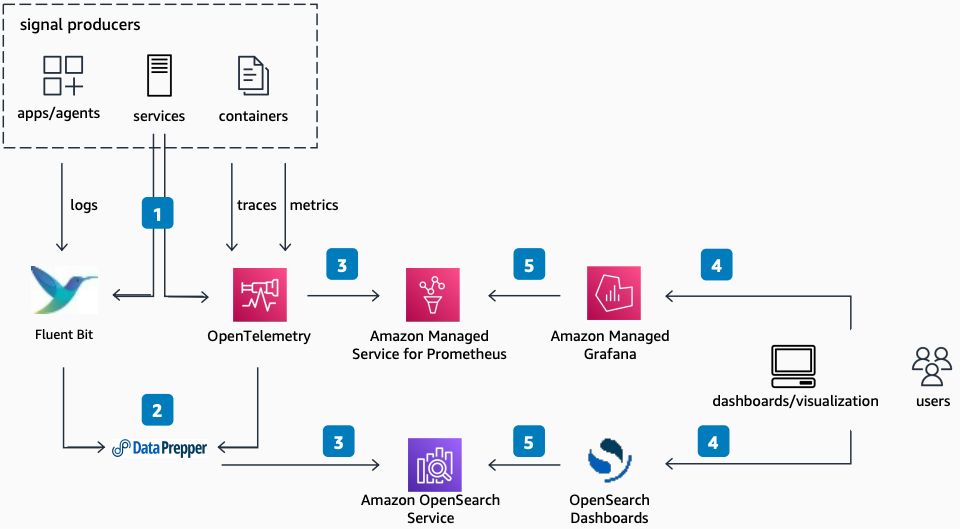
Observability should explain what happened when the system produced an output. Subject to privacy, retention, access-control, and data-minimization requirements, store approved input or output summaries, versions, retrieval results, tool traces, scores, reviewer feedback, fallbacks, escalations, latency and error signals, user feedback, and safety events. Use them to investigate drift, incidents, and changed evaluation conditions.
Use logs, traces, and model outputs to investigate why the system produced a given result.[3]
After release, compare observed behavior with the original acceptance criteria. Add cases or revise metrics when incidents, user feedback, or a changed production context makes the original test set incomplete.[2]
Trigger reevaluation when the system changes
A new evaluation cycle should be planned when a change could affect behavior. Common triggers include:
- Model or model-provider updates
- Prompt or system-instruction changes
- Major knowledge-base updates
- New tools, connectors, or APIs
- Routing or workflow changes
- A new user segment or operating context
- A production incident
- Material changes in privacy, safety, or regulatory expectations
Model, knowledge-system, integration, and incident changes trigger repeat evaluation.[4] For a new connector, review permissions, arguments, and fallback behavior before release.
Conclusion: define the release decision
An AI feature evaluation plan clarifies the release decision. It defines the intended behavior, relevant cases, quality and safety measures, failure ownership, and evidence required before release.
Governance, domain expertise, and operational judgment remain part of the decision. The plan makes evidence reviewable through versioned datasets and runs, failure analysis, release gates, ownership, and approval.
Sources
- [1] AI RMF Core
- [2] NIST AI RMF Playbook: Measure
- [3] Observability in Generative AI
- [4] Review the Agent Evaluation Checklist
Frequently Asked Questions
What should an AI evaluation dataset include?
Include normal, boundary, ambiguous, known-failure, misuse, out-of-scope, and fresh development-independent cases. Add tool, retrieval, routing, and handoff cases when the feature is agentic.
How should AI agents be evaluated differently?
Agent evaluation may include tool-call accuracy, retrieval quality, routing, handoffs, robustness, repeated runs, and behavior when tools are unavailable. These checks are specific to agentic workflows and should not be generalized to every AI feature.[4]
;)


