
About Donusoft
From concept to completion, Donusoft brings your ideas to fruition, creating impactful products that make a difference. Experience the power of innovation with us.
Find Us Our Location
- Seeb, Muscat, Oman
- [email protected]
- +96895342515

Blog

8 October
What the MHRA AI Airlock Phase 3 Application Says About Medical Device Monitoring
- AI
- 0 Comments
The MHRA AI Airlock Phase 3 application highlights deployment context, local oversight and communication as challenges for AI medical device post-market surveillance. Here’s what that framing does—and does not—establish.

6 October
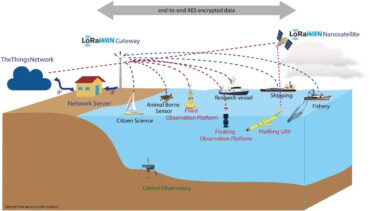
Marine Snow Image Classification: What Underwater Images Can—and Can’t—Show
- AI
- 0 Comments
Underwater images can help classify marine snow by visible morphology, but they cannot establish composition or sinking behavior on their own. See what image pipelines can reveal and where independent evidence is needed.

5 October
How AI Outdoor Camera Alerts Fit Into Human Monitoring—and Their Limits
- AI
- 0 Comments
An outdoor-camera alert is information for a monitoring center to assess, not proof that a threat occurred. See how AVS-01 classifies alarm information and what its levels do—and do not—tell you about camera detection.

5 October
Self-Hosted AI vs Cloud AI: A Practical Decision Framework for Small Software Teams
- AI
- 0 Comments
A practical comparison of managed AI APIs, cloud-hosted open models, and self-hosted deployments for small software teams weighing data needs, costs, and maintenance.

23 September
Computer-Use AI for Business Software: Where It Fits Beyond Code Generation
- AI
- 0 Comments
Computer-use AI lets agents interact with existing business applications through screenshots, mouse clicks, and keyboard input. Learn where this approach may fit, how it differs from code generation and integrations, and why permissions and human oversight matter.
23 September
IoT Semantic Interoperability: Why AIoT Systems Need More Than Connectivity
- AI
- 0 Comments
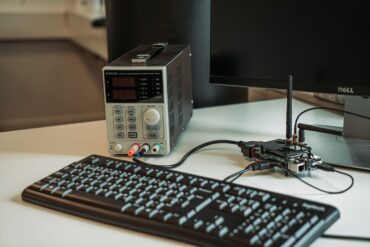
Connecting devices is not enough for AIoT. Discover how shared data models, semantic relationships, service interfaces, and responsibility boundaries support interoperability across device, edge, and cloud layers.
21 September
MLPerf Inference Energy Efficiency: How to Read the Results
- AI
- 0 Comments
The latest MLPerf results show how to evaluate energy-aware AI inference by considering workload quality, throughput, latency, system power, and energy per stream together.
17 September
Generative UI: How AI Creates Interactive Web Experiences
- AI
- 0 Comments
Generative UI moves AI beyond text by combining model reasoning, tool calls, structured outputs, reusable components, validation, streaming, and browser rendering.
15 September
WebNN Computer Vision: How Browser-Based Inference Works
- AI
- 0 Comments
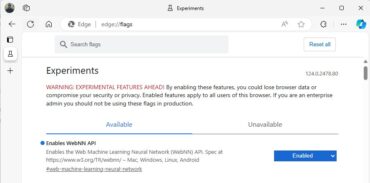
A practical overview of WebNN for browser-based computer vision, covering computational graphs, ONNX Runtime Web, device preferences, fallback behavior, tensor movement, and privacy considerations.

15 September
How to Design an AI Escalation Workflow for Human Oversight
- AI
- 0 Comments
Learn how to design an AI escalation workflow that defines risk triggers, human authority, case routing, preserved context, appeals, incident response, and continuous monitoring.


